
Law Office Referrals
Click Here
Medical Office Referrals
Click HereStaying active is an important part of a healthy lifestyle, but sports and physical activity can also put stress on the body. Whether you're a competitive athlete, weekend warrior, fitness enthusiast, or simply enjoy recreational activities, a sports injury can affect your ability to work, exercise, and enjoy the activities you love.
Sports injuries can happen in an instant, a hard impact, awkward landing, sudden twist, or fall, or they can develop gradually as a result of repetitive movements and overuse. From neck and back pain to muscle strains, joint injuries, and sprains, getting an appropriate evaluation and treatment plan can be an important part of the recovery process.
At The Neck and Back Clinics, we provide chiropractic care and rehabilitation services for patients experiencing sports-related injuries throughout Las Vegas, Nevada, and Laveen, Arizona.
A sports injury is an injury that occurs during exercise, athletic competition, training, or recreational physical activity. While some injuries are immediately noticeable, others may develop over time and become more apparent as activity continues.
Sports injuries may affect muscles, joints, ligaments, tendons, nerves, and the spine. Common examples include:
The severity of a sports injury can vary significantly. Some injuries may improve with appropriate conservative care and rehabilitation, while others may require additional medical evaluation, imaging, or referral to another healthcare professional.
Sports injuries can happen to athletes of all ages and skill levels. Understanding how injuries occur may also help individuals recognize when an injury should be evaluated.
Contact, collisions, falls, awkward landings, and sudden changes in direction can place significant stress on the body's muscles, joints, and other structures.
Repeating the same movement can place continued stress on certain areas of the body. Running, throwing, swinging, swimming, and repetitive lifting are examples of activities where overuse may contribute to discomfort or injury.
Suddenly increasing workout intensity, mileage, weight, frequency, or duration can place demands on the body that it may not yet be prepared to handle.
Strength, flexibility, balance, and range of motion can all influence how the body moves during physical activity. Limitations in these areas may affect movement and athletic performance.
Returning to sports before an injury has adequately recovered may increase the likelihood of additional problems. Rehabilitation can be an important part of helping restore strength, mobility, and function following an injury.
Although sports injuries can occur anywhere in the body, the neck and back can be particularly vulnerable during activities involving contact, lifting, twisting, repetitive movement, or sudden changes in direction.
Neck pain may occur following contact, a fall, sudden movement, or repetitive activity. Athletes participating in football, hockey, basketball, gymnastics, cycling, and other activities may experience neck-related injuries or discomfort.
Symptoms may include pain, stiffness, reduced range of motion, or discomfort that extends into the shoulders or upper back.
The muscles and joints of the upper back can become strained during lifting, throwing, contact sports, or repetitive movements. Poor movement mechanics and muscle fatigue may also contribute to upper-back discomfort.
Low back pain is common among individuals who participate in activities involving lifting, bending, twisting, jumping, or repetitive loading.
Sports such as weightlifting, golf, baseball, tennis, running, and football can place considerable demands on the lower back.
An evaluation may help determine whether symptoms are related to muscles, joints, nerves, or other structures and whether additional care may be appropriate.
You don't have to compete at a professional level to experience a sports injury.
Children and teenagers participating in organized sports, adults exercising at the gym, recreational athletes, runners, cyclists, and weekend athletes can all experience injuries.
In fact, individuals who participate in physical activity inconsistently may place additional demands on their bodies when they suddenly return to a demanding activity.
Regardless of your activity level, paying attention to persistent pain, changes in movement, or limitations following an injury is important.
Not every ache following physical activity requires professional treatment. Temporary muscle soreness after an unfamiliar workout can be a normal response to increased activity.
However, an injury may warrant an evaluation when symptoms persist, worsen, or interfere with normal activities.
Consider seeking an evaluation if you experience:
Serious injuries may require immediate medical attention. Severe pain, significant trauma, an obvious deformity, loss of consciousness, or other serious symptoms should be evaluated by an appropriate emergency or medical provider.
Treatment for a sports injury depends on the type and severity of the injury, as well as the individual's condition and goals.
For appropriate patients, chiropractic care may be incorporated into a broader approach to musculoskeletal care. Treatment may focus on areas of the spine or extremities, where clinically appropriate, with the goal of supporting mobility and function.
At The Neck and Back Clinics, care is individualized rather than based on a one-size-fits-all approach. An evaluation helps determine what areas may be contributing to a patient's symptoms and what type of care may be appropriate.
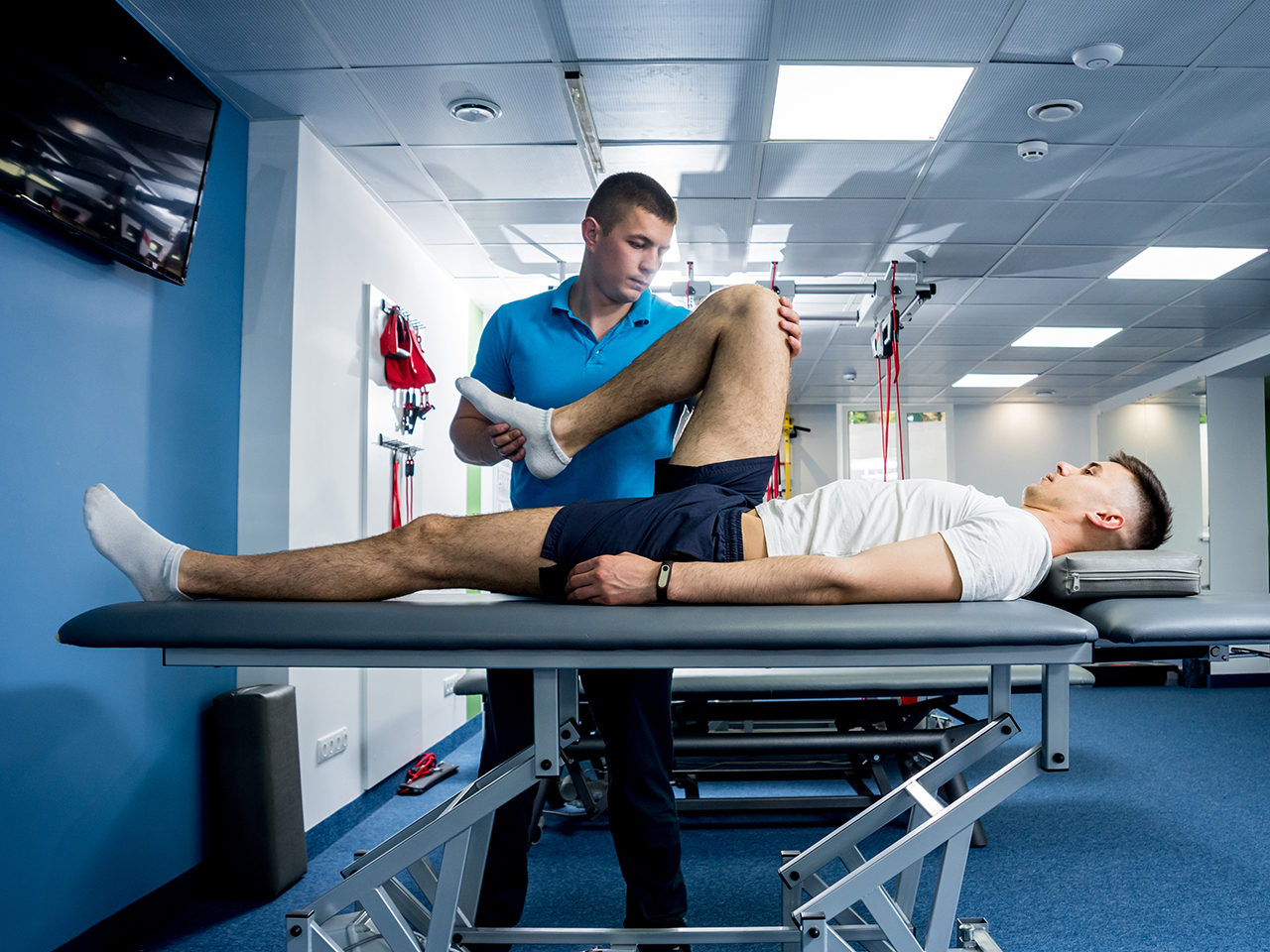
Recovery isn't simply about feeling better. For an athlete or active individual, rehabilitation may also involve restoring movement, strength, flexibility, balance, and functional ability.
Depending on the patient's condition, rehabilitation may include:
The specific rehabilitation program will depend on the individual's injury and treatment needs.
At our Nevada clinics, physiotherapy may be incorporated into a patient's rehabilitation plan. At our Arizona clinic, PMMTP (Physical Medicine Modalities and Therapeutic Procedures) may be utilized as prescribed as part of the patient's care.
The objective is to help patients progressively work toward improved movement and function while following an appropriate treatment plan.
One of the biggest questions athletes often have after an injury is, "When can I get back to my sport?"
There isn't one answer that applies to everyone.
Returning to activity too quickly may place additional stress on an area that hasn't fully recovered. On the other hand, remaining inactive longer than necessary may not be appropriate for every injury.
A gradual return to activity may involve progressing from basic movements to strengthening, functional activities, and eventually sport-specific movements, as appropriate.
Your treatment provider can help determine what activities may be appropriate based on your individual condition and recovery.
A sports injury can affect more than your ability to participate in a game or workout. It can affect how you move, work, exercise, sleep, and enjoy everyday activities.
Understanding your injury and having an appropriate treatment and rehabilitation plan may be an important step toward recovery.
At The Neck and Back Clinics, we understand that a sports injury can interrupt the activities you enjoy and the routines you rely on. Our approach combines individualized chiropractic care and rehabilitation services that may help patients address their injuries, restore movement, and work toward returning to the activities that matter most.
Don’t let an injury keep you on the sidelines. If sports-related pain or limited mobility is affecting your daily routine, contact The Neck and Back Clinics to schedule an evaluation and explore your care options.
With locations throughout Las Vegas, NV, and in Laveen, AZ, our clinics are here to help patients address sports-related injuries and work toward improved movement and function.
If you're experiencing pain or limited movement following a sports injury, contact The Neck and Back Clinics to learn more about scheduling an evaluation.
Treatment recommendations vary based on the individual and the nature and severity of an injury.